The Next Chapter: Purpose and Direction
2025-12-05
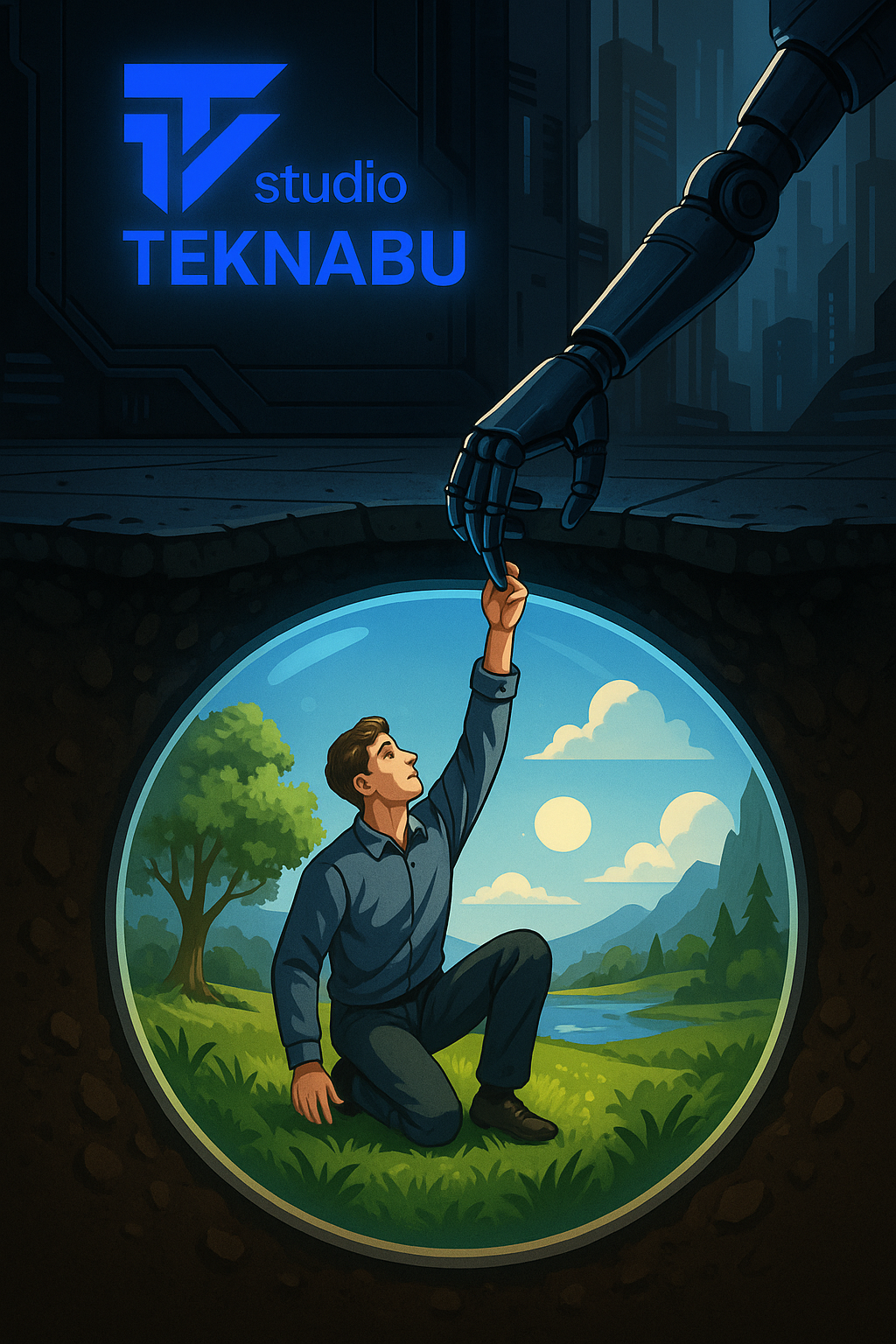
For the past few months, I have been quiet online. From the birth of my first child, wife returning to work and my parents visiting from overseas, family has been the priority.
During this time I’ve been rebuilding Studio Teknabu from the ground up, not just the website, but the identity and purpose behind it. What started as a marketing and portfolio page grew into something much more: a home for my work, my ideas, and the kind of software I want to build.
This post is a look behind the curtain: why I created the studio, why freelancing makes sense right now, the technical craft that went into the new site, and what this next phase means for me.
Why I Built Studio Teknabu
Across hospitality, project management, and eventually software development, I kept noticing the same pattern:
*Most tools don't feel like they're made for the people who use them*
Some are bloated. Some are confusing. Some solve problems no one actually has. Some make simple tasks unnecessarily complicated.
Coming from environments where tools must be practical, clear, and efficient, this always frustrated me.
Studio Teknabu became my answer. Not a corporate brand or agency, but an independent workshop. A place to build small, thoughtful tools that feel human and genuinely useful.
Everything I create here is guided by three principles:
- Clarity - Software should be understandable.
- Craftsmanship — Details matter.
- Curiosity — keep exploring, keep improving.
Studio Teknabu is the container for that philosophy. And once I realised that, it stopped being “just a landing page” and became a platform, something living, growing, and capable of evolving with me.
Why Freelancing (Instead of the Traditional Developer Path)
“The times they are a-changin.” — Bob Dylan
New Zealand’s junior developer landscape is... unusual.
Roles exist, but in very limited supply. Competition is high. Job descriptions often say junior but expect intermediate-level output. Many roles are filled internally or through networks, which makes breaking in difficult for people without industry connections.
I saw similar patterns in the hospitality industry: when opportunity depends on who you know, pipelines shrink and talent stalls.
Over reliance on marketing internships which exasparate the problem of limited roles, high competition and closing pipelines to getting experience if your not deemed selectable. There is still a bias for academic compliance over real-world experience.
So instead of waiting for the right door to open, I decided to build my own.
For me, freelancing isn't a fallback, it's a strategic move.
Why freelancing makes sense right now
- Creative Autonomy — I can build the ideas I believe in.
- Real-World Learning — every project sharpens my craft. Thinking, adapting, simplifying and delivering.
- Proof of Ability — not theoretical, not just academic, real output.
- Momentum — instead of applying and waiting, I’m building and improving daily.
And importantly:
**There’s a growing demand for independent, lightweight, practical software.**
Solo operators, freelancers, niche businesses, and small teams don’t need enterprise systems, they need simple, dependable, well-crafted tools.
Freelancing allows me to meet that need directly while continuing to grow as a developer creating opportunities for collaboration.
From HTML/CSS/JS to a Professional Studio Platform
Building a website is one thing. Turning it into a polished, high-performance studio foundation is another.
This project pushed me beyond “tutorial basics” into actual production-level craft.
1. From Functional to Intentional
My first version worked, but lacked identity.
To feel like a studio (not a student project), it needed:
- a calm, modern visual system
- professional typography
- consistent spacing and rhythm
- a branded colour palette
- subtle, meaningful animation
- soft-neutral backgrounds
- expressive, thoughtful layout
Everything needed to feel deliberate.
2. Responsive behaviour that feels good
Mobile-first matters, but so does desktop, especially for professional presentation.
I iterated heavily on:
- navigation behaviour
- animation timing
- stacking patterns
- spacing rhythm
- hero behaviour across devices
Small changes made huge improvements.
3. Hardening the Foundation
To move from “looks good” to “built properly”, I added:
- semantic HTML with proper roles
- accessibility improvements
- image optimisation
- preloading and caching
- schema markup
- meta tags
- canonical structure
- robots + sitemap
- security headers
This isn’t just a landing page, it’s the foundation of a studio.
4. Professional Performance via Cloudflare
Cloudflare gave me:
- faster global delivery
- SSL without hassle
- cleaner DNS
- caching + analytics
- DDoS + bot protection
And along the way, I learned far more about DNS, propagation, and caching quirks, especially when subdomains suddenly stop resolving on only your local machine.
And interestingly, I learned all of this just days before Cloudflare experienced a global outage, which gave me a very real reminder of how invisible infrastructure underpins everything we build, and how important it is to understand what’s happening beneath the surface.
Solving Real Problems (The Actual Learning)
Every build teaches something. A few highlights:
1. DNS Mysteries
After switching to Cloudflare, my subdomain vanished on my machine but worked everywhere else.
I now understand:
- DNS propagation delays
- ISP caching
- local resolver caching
Why “switch it off and on again” is sometimes… correct.
2. Mobile Layout Bugs
Accordion components looked polished on desktop but collapsed awkwardly on mobile. A single-column layout fixed everything.
3. Hero Animation Glitches
Text was jumping during animation transitions. Adjusting transform-origin and spacing solved it instantly.
It’s always the small details that teach you the most.
What’s Next for Studio Teknabu
Studio Teknabu is shifting from a “portfolio site” to a true studio platform.
What’s coming next:
- Small, focused tools
- Internal micro-products
- Freelance + client offerings
- A structured blog + learning resources
- A newsletter exploring process and craft
- Case studies and build journals
- Showcases for tools and experiments
The site will continue evolving as I keep building.
Freelancing isn’t a backup plan for me. It’s the **most direct** path to creating opportunities, building skills, and shaping the kind of studio I want to run.
Studio Teknabu is the foundation for that.
To be a Software Developer and not wait for someone else to grant me that title.